
Dear tRNA community,
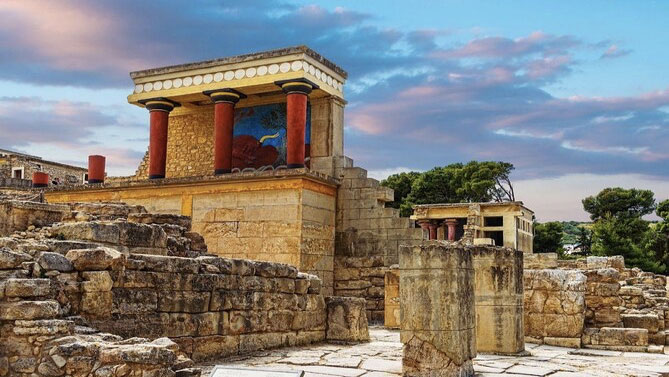
We are delighted to once again invite you to Greece for the 30th anniversary of the tRNA Conference that will take place between 20-24 September 2026, at the Aquila Atlantis Hotel, in the heart of the city of Heraklion on the beautiful island of Crete. We hope that with your participation and contribution we will bring the tRNA community together in one of the most exciting conferences featuring a rich blend of great inclusive science and unique cultural experiences.
Research on tRNA has always been closely connected with the evolution of the genetic code and life itself. Today, more than ever, it is evident that tRNA research continues to reveal new and surprising frontiers of cellular metabolism which will be presented in diverse sessions devoted to synthetic biology, tRNA biogenesis, processing, editing, transfer and localization, recognition of tRNA by aminoacyl-tRNA synthetases and their roles in diseases, structure/function relationships of translation factors and beyond, tRNA-mediated gene expression regulation, tRNA-associated proteins and protein networks, functions of tRNA fragments, and tRNA-based therapies.
We welcome you to the place that gave birth to the original, enduring ideas of the modern world and we invite you to enjoy both the 30th tRNA Conference and your stay in Greece and the beautiful island of Crete.
Conference Chair
Constantinos Stathopoulos
University of Patras, Greece

Conference Co-Chairs
Vicky Stamatopoulou, University of Patras, Greece
Jinwei Zhang, National Institutes of Health, USA
Hubert Becker, University of Strasbourg, France
Michael Ibba, Chapman University, USA
The Phaistos Disc
The Disc of Phaistos is a fascinating archaeological artifact discovered in 1908 at the Minoan palace of Phaistos on Crete. Dating to around 1700 BCE, the disc is made of fired clay and features a unique spiral of symbols on both sides, totaling 241 signs.
These symbols are believed to represent an early form of writing, possibly related to the Minoan civilization, though their exact meaning remains undeciphered. The disc’s purpose is still a topic of debate, with theories ranging from a religious object to a form of early communication.
Its enigmatic nature has captured the imagination of historians and archaeologists, making it one of the most important and intriguing artifacts from ancient Crete. The Disc of Phaistos is now housed in the Heraklion Archaeological Museum, where it continues to be a subject of study and fascination.
Download the Poster!